

Since 2008
ROOM ACOUSTICS · PRODUCT GUIDE
Acoustic Panels: A Practical Guide to Choosing Room Treatment
Acoustic panels are used to manage sound reflections inside a room. The right choice depends on what you hear, the room’s dimensions and use, the frequencies that need attention, and whether your goal is room treatment or sound isolation.
If you are hearing bass boom, unclear vocals, or a room that sounds overly reflective, start with the room—not a guessed panel count. Send room photos and details for a free Room Analysis with Dennis Foley.
Quick answer: What should you look for in acoustic panels?
Choose acoustic panels based on the room’s actual problem and the frequencies involved. Check published absorption data by frequency, test conditions and mounting, panel dimensions and depth, placement, finish, safety requirements, and the room’s available space. Panels that absorb reflections do not automatically stop sound from passing through walls.
- Echo or excessive reverberation: assess how much reflected sound needs to be controlled and where it is returning from.
- Bass boom: do not assume thin decorative panels will resolve low-frequency buildup; room dimensions, listening position, and suitable low-frequency treatment matter.
- Noise reaching another room: this is a sound-transmission problem and may require changes to the wall, door, ceiling, floor, or other path—not just absorptive panels.
What do acoustic panels do?
Absorptive panels reduce some sound energy reflected from room surfaces. Depending on the material, panel construction, frequency, mounting, and room, this can help manage reverberation and reflections. The effect is not identical at every frequency, so a product should be assessed using frequency-specific data and the installation conditions behind that data.
Diffusers have a different role: they redirect or scatter reflections rather than simply absorbing them. Some rooms use a planned combination of absorption, diffusion, and sound-isolation measures. The right balance depends on the use of the room and the sound problem being addressed.
OSHA’s technical manual describes absorptive treatments as a way to reduce reverberant buildup and distinguishes them from transmission-loss materials used to limit sound passing from one space to another. It also notes that room absorption does not remove direct sound from a source. Read OSHA’s noise-control guidance.
Are acoustic panels the same as soundproofing?
No. Acoustic treatment changes sound behavior inside the room; sound isolation aims to reduce sound transmission between spaces. A panel can help manage reflections without preventing voices, music, or equipment noise from passing through a wall. A project may need one approach or both, depending on the source, path, and destination of the sound.
| What you notice | Likely question to investigate | What to evaluate |
|---|---|---|
| Speech or music sounds reflected in the room | Is reverberation or a strong reflection affecting clarity? | Room surfaces, use, listening/microphone positions, and absorption by frequency |
| Low notes are uneven or build up at a seat | Is the room producing bass buildup or decay problems? | Room dimensions, source/listener positions, and treatment designed for the low-frequency issue |
| Sound is heard in a neighboring room | Where is sound transmitting through the building? | Walls, doors, ceiling, floor, gaps, mechanical paths, and construction details |
These descriptions help sort the problem; they are not a diagnosis. If speech privacy, workplace exposure, code compliance, or a building assembly is involved, consult the appropriately qualified professional for that requirement.
How should you compare acoustic panel types?
Material names alone do not tell you how a complete panel will perform. Compare the published data for the finished assembly, including frequency range, mounting and air space, thickness/depth, and test method. Then match that information to the room’s use and the goal of the treatment.
| Panel approach | What to compare | Questions to ask before choosing |
|---|---|---|
| Porous foam treatment | Frequency-specific absorption, depth, construction, mounting, finish, and applicable safety information | Which frequencies are addressed? Does the data describe this exact panel and setup? What room problem is it intended to help? |
| Fabric-faced absorptive panel | Core and fabric assembly, frequency data, thickness, air gap, frame, and installation | Is the complete assembly tested? Is the facing appropriate for sound to reach the absorber? Does the mounting match the test? |
| Diffusive or reflective treatment | Design, dimensions, placement, frequency range, and intended room use | Is scattering preferable to additional absorption at this location? Has the room been assessed as a whole? |
| Sound-isolation construction | Wall/ceiling/floor assembly, doors, seals, flanking paths, and frequency-dependent transmission data | Where does the sound travel? Is a panel being mistaken for a complete isolation system? |
A single rating or a product label may not answer every question about a room. Request the underlying test information and confirm that it applies to the selected size, finish, mounting, and use.
Which acoustic panels make sense for your room?
Recording studio or home studio
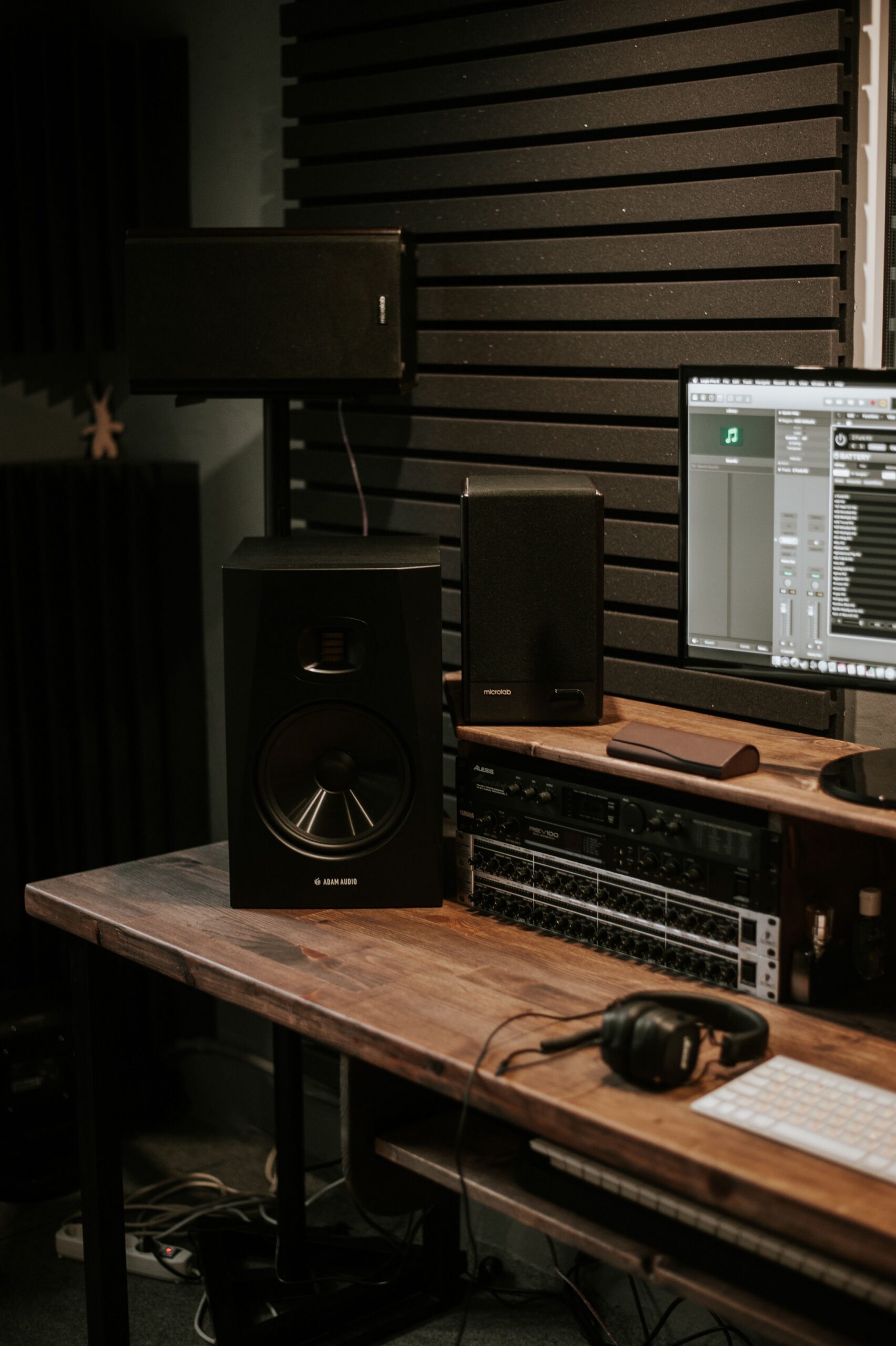
For a recording or mixing room, consider what the room is doing to the sound at the microphone and listening position. A garage converted into a studio may have constraints in room size, construction, ceiling height, and available wall space. Describe whether the main issue is bass boom, reflected sound, monitoring consistency, or sound escaping to other rooms; those are different planning questions.
Voice-over or vocal room
Start by identifying whether the recording sounds roomy, has a distinct echo, or is affected by low-frequency buildup. Avoid covering every surface by guesswork: excessive or uneven absorption can make a room sound unnatural, while the wrong treatment may leave the actual problem untouched.
Home theater or listening room
Tell the designer where the speakers and seats are, what you hear at the main seats, and whether the concern is bass, reflected sound, or noise leaving the room. Room dimensions and treatment depth can affect usable space, so include those constraints before choosing quantities or placement.
Office, conference room, or commercial space
For a work space, describe the activities, occupancy, major sound sources, surfaces, and whether the goal is clearer conversation, less reverberation, or sound separation. Larger rooms and high ceilings may need a coordinated plan for walls, ceilings, equipment, and sound paths rather than a wall-panel count alone.

What should you check before buying acoustic panels?
- Describe the symptom. Note where and when the problem occurs, what sound source is active, and where the listener or microphone is located.
- Record room dimensions. Provide length, width, ceiling height, room purpose, and any doors, windows, or major openings.
- Separate treatment from isolation. Say whether the sound problem is inside the room, between rooms, or both.
- Request relevant performance data. Ask for absorption by frequency and the test and mounting conditions. For isolation, request information appropriate to the complete building assembly.
- Confirm fit and constraints. Check dimensions, thickness/depth, mounting, finish, weight, available space, installation, shipping, and any applicable fire or building requirements.
- Plan placement before ordering. Panel count and location should follow the room goal and layout—not a generic kit assumption.
Acoustic Fields’ current product listing describes its Acoustic Foam Panels as 27 × 57 inches and offers 3- or 4-inch depth and wood or paint finish options. The listing also notes special handling and shipping requirements. Confirm current specifications, suitability, delivery terms, and price on the Acoustic Fields Acoustic Panels product page before ordering.
Not sure which acoustic panels your room needs?
That is what the free Room Analysis is for. Send photos and basic room information so Dennis can understand the space, discuss what you are hearing, and recommend next steps. Room design is available remotely; installation availability is limited to the United States. Product shipping availability should be confirmed separately.
Acoustic panel questions
Will acoustic panels soundproof a room?
Absorptive panels can reduce some reflections inside a room, but they do not by themselves soundproof the room or stop sound transmitting through its walls. Sound isolation usually involves the construction and continuity of the entire sound path.
Will thin foam panels fix bass boom?
Do not assume that thin foam will fix bass boom. Low-frequency behavior depends on room dimensions, source and listening positions, and the type and placement of treatment. Have the specific room and frequencies assessed before buying panels.
Are foam panels better than fabric-wrapped panels?
Neither material label alone determines the better choice. Compare the complete product’s frequency-specific test data, thickness/depth, mounting, finish, and suitability for your room and goal.
How many acoustic panels do I need?
There is no reliable one-number answer without understanding the room, the listening or recording positions, the problem frequencies, and the desired result. Room dimensions and photos can help an acoustics professional guide the next step.
Can Acoustic Fields help remotely?
Acoustic Fields reports that room analysis and design are available remotely worldwide. Installation is available in the United States only. Confirm product shipping and any location-specific options directly with Acoustic Fields.